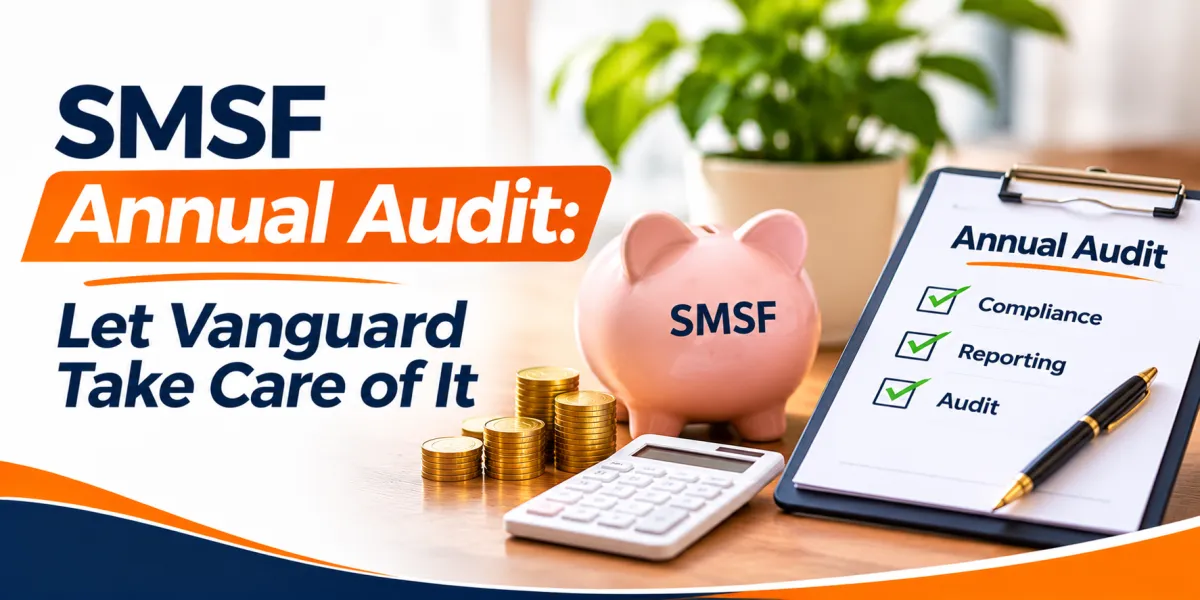
SMSF Annual Audit on Your List? Let Vanguard Take Care of It.
Managing a Self-Managed Super Fund (SMSF) gives trustees greater control over their retirement savings. However, with that control comes important responsibilities, including financial reporting, record-keeping and annual compliance requirements.
One of the most important obligations is the annual SMSF audit.
If your SMSF annual audit is approaching, or you haven't organised it yet, now is the time to get everything in order. Missing deadlines or overlooking important compliance requirements can create unnecessary stress for trustees.
At Vanguard Accounting, we understand that managing an SMSF involves more than simply tracking investments. Having the right audit support can help trustees understand their obligations and keep their fund's reporting on track.
Let's explore what an SMSF annual audit involves and why it matters.
1. What Is an SMSF Annual Audit?
A Self-Managed Super Fund annual audit is an independent examination of an SMSF's financial statements and compliance with relevant superannuation laws.
Australian SMSFs are generally required to undergo an annual audit by an approved SMSF auditor, even if the fund has limited activity or no contributions during the financial year.
The audit generally involves two important components:
Financial audit: The auditor examines the fund's financial statements and supporting records to assess whether they present a true and fair view of the SMSF's financial position and performance.
Compliance audit: The auditor checks whether the SMSF has complied with relevant superannuation and regulatory requirements.
Both components are important for maintaining transparency and ensuring trustees meet their responsibilities.
2. Why Is an Annual SMSF Audit Important?
An annual audit is not just another administrative task. It is an essential part of SMSF compliance.
A properly conducted audit can help identify issues with financial reporting, investment documentation, transactions and compliance obligations.
Some important benefits include:
Reviewing the accuracy of SMSF financial information.
Identifying potential compliance issues.
Checking supporting investment documentation.
Reviewing related-party transactions.
Assessing whether fund assets are appropriately recorded.
Helping trustees understand areas requiring attention.
An independent audit also provides an additional level of oversight over the fund's financial and compliance records.
Remember, the responsibility for managing the SMSF and meeting its legal obligations remains with the trustees.
3. Who Needs an SMSF Annual Audit?
Generally, every SMSF registered with the Australian Taxation Office must be audited annually.
This requirement applies regardless of whether the fund:
Received contributions during the year.
Made investment purchases or sales.
Earned investment income.
Had limited transactions.
Experienced little or no activity.
Even if your SMSF has not carried out many transactions, you cannot simply skip the annual audit.
The audit must be completed before the SMSF annual return is lodged.
Trustees should also ensure that their auditor is appropriately registered and independent of the fund's management and financial preparation activities.
4. What Documents Are Required for an SMSF Audit?
One of the biggest reasons SMSF audits take longer than expected is incomplete documentation.
Preparing the required information before the audit begins can make the process more organised.
Depending on the fund's activities, an auditor may request:
SMSF bank statements.
Investment statements.
Contribution records.
Pension payment information.
Member balances and statements.
Financial statements.
Property valuation documents.
Rental income and expense records.
Share and managed fund statements.
Insurance documentation.
Trustee meeting minutes and resolutions.
Related-party transaction records.
Previous year's audited financial statements.
If your SMSF holds property, collect relevant purchase documents, valuation evidence, rental records and expense details.
For funds with investments in shares or other financial products, make sure the relevant statements and ownership information are available.
The documents required will depend on the structure and investment activities of your SMSF.
5. Common SMSF Compliance Issues to Watch Out For
SMSF trustees have specific responsibilities under superannuation law. Some common areas that may require attention during an audit include:
Incorrect asset valuations: SMSF assets generally need to be reported at market value at the end of each financial year. Appropriate supporting evidence should be maintained.
Related-party transactions: Transactions involving related parties must comply with relevant superannuation rules. Certain acquisitions and investments are restricted.
Sole purpose test: SMSF investments and activities must meet the sole purpose test, meaning the fund must be maintained for providing retirement benefits to members or their dependants in permitted circumstances.
Separation of assets: SMSF assets must be kept separate from personal and business assets of trustees and members.
Inadequate record-keeping: Missing invoices, incomplete investment records and undocumented transactions can make it difficult to verify financial information.
Incorrect pension payments: Pension arrangements must comply with applicable minimum payment and other superannuation requirements.
Identifying potential problems early can help trustees address issues before they become more complicated.
6. What Happens If You Miss Your SMSF Audit Deadline?
SMSF annual returns have specific lodgement deadlines, and the audit must be completed before the return is lodged.
If you fail to meet your reporting obligations, your fund may face compliance consequences.
Depending on the circumstances, these can include:
ATO follow-up and compliance action.
Administrative penalties for trustees.
Additional reporting requirements.
Increased scrutiny of the fund.
Potential consequences for the fund's compliance status.
The exact consequences depend on the nature of the breach and the circumstances involved.
If your SMSF audit is overdue, don't ignore it. Contact an appropriately registered SMSF auditor or seek professional advice to understand the steps required to bring your fund up to date.
7. Why Choose Professional SMSF Audit Support?
SMSF rules and reporting requirements can be complicated, particularly when your fund has multiple investments, property holdings, pension arrangements or related-party transactions.
Professional support can help make the process more manageable.
An experienced SMSF auditor can independently examine the fund's financial records and compliance position. However, the auditor must remain independent and cannot simply approve the fund without conducting the required checks.
Working with an accounting professional to organise your financial information before the audit can also help reduce delays caused by missing records.
The key is to keep your accounting preparation and independent audit functions appropriately separate.
8. How Vanguard Accounting Can Help
Managing your SMSF responsibilities doesn't have to become overwhelming.
At Vanguard Accounting, we assist SMSF trustees with accounting and compliance-related support, helping them organise financial information and prepare for their annual reporting requirements.
Our services include:
SMSF accounting and financial statement preparation.
SMSF annual compliance support.
Assistance with audit documentation.
SMSF setup and compliance assistance.
Record-keeping and financial reporting support.
Coordination of the information required for independent audits.
Where an independent audit is required, it must be conducted by an appropriately registered and independent SMSF auditor.
Our aim is to help trustees stay organised, understand their responsibilities and manage their SMSF administration more confidently.
Final Thoughts: Don't Leave Your SMSF Audit Until the Last Minute
Your SMSF is an important part of your retirement planning, and maintaining accurate records and meeting annual compliance requirements should be a priority.
An annual audit helps provide independent oversight of your fund's financial statements and compliance position.
Start gathering your documents early, review your financial records and make sure your audit is completed before lodging your SMSF annual return.
Have your SMSF annual audit coming up? Let Vanguard Accounting help you organise your SMSF accounting and compliance requirements.
Contact Vanguard Accounting today and take the stress out of managing your SMSF paperwork.
Website: https://vanguardaccounting.au/
Frequently Asked Questions (FAQs)
1. Is an annual audit compulsory for every SMSF?
Generally, yes. Every SMSF registered with the ATO must undergo an annual independent audit, even if the fund has had little or no activity during the financial year.
2. Who can conduct an SMSF audit?
An SMSF audit must be conducted by an approved SMSF auditor registered with the Australian Securities and Investments Commission (ASIC).
3. When should an SMSF audit be completed?
The audit must be completed before the SMSF annual return is lodged. Trustees should organise the audit early enough to meet their applicable lodgement deadline.
4. What happens if an SMSF fails its audit?
The auditor may identify issues and report relevant contraventions to the ATO. Trustees may need to address the issues and take corrective action depending on the circumstances.
5. Can an SMSF have an audit if it has no transactions?
Yes. An SMSF generally remains subject to annual audit requirements even if it has no contributions, investment activity or other transactions during the year.
Disclaimer: This article provides general information about Australian SMSF audit and compliance requirements. It is not financial, legal or taxation advice. SMSF trustees should seek professional advice based on their fund's circumstances and consult an appropriately registered SMSF auditor for independent audit services.